
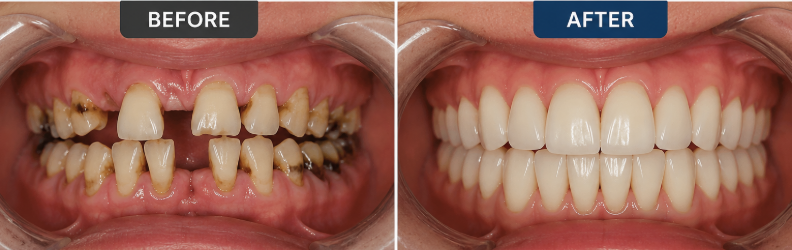
Introduction to Full Mouth Rehab
Full mouth rehab, also called full mouth rehabilitation or complete dental restoration, is a treatment that rebuilds or replaces all teeth in your mouth. Many people need this when they have many dental problems at once. For example, you may have broken, worn, or missing teeth. Because your mouth is important for eating, speaking, and smiling, full mouth rehab can greatly improve your quality of life. Dentists use this approach to restore both function and appearance. In many cases, it helps people feel more confident and comfortable.
Common Symptoms and Dental Issues Leading to Full Mouth Rehab
Often, people seek full mouth rehab when they notice several dental problems. These issues can make daily life harder. For instance, you might have:
Additionally, some people feel embarrassed by their smile. If you notice these symptoms, it may be time to talk to your dentist about restorative dentistry options.
Causes and Risk Factors
There are many reasons why someone might need full mouth reconstruction. For example, long-term tooth decay can damage many teeth. Gum disease, also called periodontitis, can cause teeth to loosen or fall out. In some cases, accidents or injuries break several teeth at once. Other risk factors include:
Because these issues can get worse over time, early treatment is important.
Diagnosis and Assessment Process
First, your dentist will do a full exam of your mouth. This includes checking your teeth, gums, and jaw. Often, X-rays and photos help the dentist see hidden problems. Sometimes, they may take molds of your teeth. Next, your dentist will talk with you about your goals and concerns. After gathering all this information, they create a custom treatment plan. This plan explains the steps needed for your full mouth rehab.
Treatment Options and Procedures Involved
Full mouth rehab uses many types of dental treatments. Because every mouth is different, your plan may include:
Sometimes, treatment happens in stages. This helps your mouth heal and adjust. Your dentist will explain each step before starting.
Benefits and Expected Outcomes
Full mouth rehab offers many benefits. For example, you can eat and speak more easily. Your smile will look better, which can boost your confidence. In addition, healthy teeth and gums lower your risk of future dental problems. Some people also notice less jaw pain or headaches. Because the results are long-lasting, you can enjoy better oral health for years.
Recovery, Aftercare, and Lifestyle Guidance
After treatment, you may need some time to heal. Your dentist will give you care instructions. For example, you may need to eat soft foods at first. Good oral hygiene is very important. Brush and floss every day, and visit your dentist for regular check-ups. If you grind your teeth, your dentist may suggest a night guard. With proper care, your new smile can last a long time.
Prevention Tips for Long-Term Oral Health
To keep your mouth healthy after full mouth rehab, follow these tips:
Because prevention is easier than treatment, these habits can help you avoid future dental problems.
Conclusion
Full mouth rehab can restore your smile and improve your quality of life. If you have many dental issues, this treatment may be right for you. Consult a qualified dentist to discuss if full mouth rehab is right for you.